


They Asked Me To Hold Her Until She Died. Today, She Turns 17.
They Asked Me To Hold Her Until She Died. Today, She Turns 17.

Judy Wright Tue, October 13, 2026 at 2:11 PM UTC
14
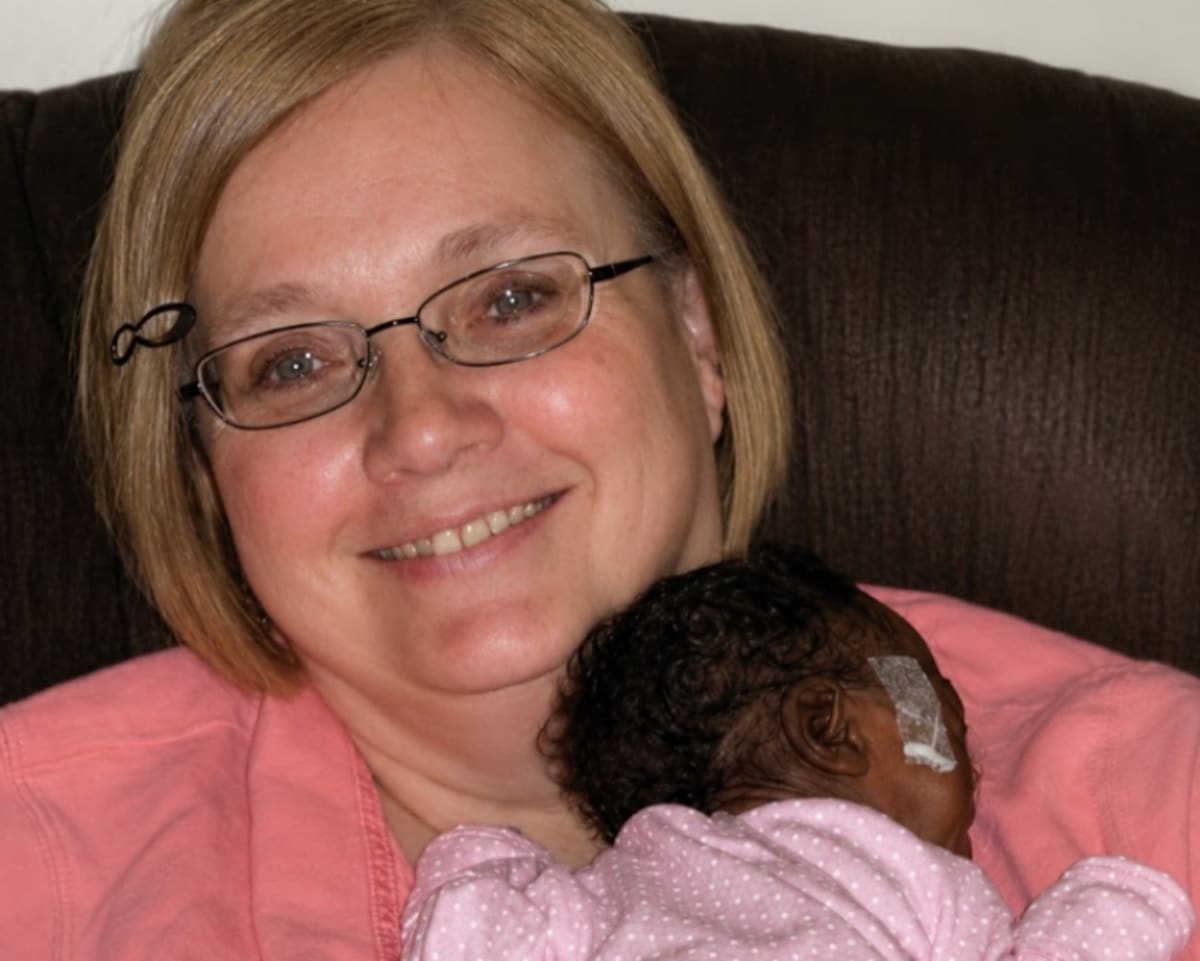
“A small shape lay wrapped tightly in a faded hospital blanket. Wires slipped out from beneath the folds.”
Seventeen years ago, the phone rang on an ordinary Friday morning.
John, my husband, was home, stretched into his recliner in plaid lounge pants and a Pink Floyd T-shirt, watching a segment about the plane that landed in the Hudson. Dudley, our cockapoo, slept across his lap. A tuna sandwich sat untouched on the table beside him.
Also Read: An 88-Year-Old Woman Was Brought To My ER. When Her Family Told Me Why, I Was Stunned.
In the kitchen, I held the last red rose of a bouquet over a brass planter, which I turned slightly, trying to decide if it belonged.
Then the phone rang. I recognized the number: Ennis Center for Children.
Beth’s voice was softer than usual. Measured. “Mrs. Wright,” she said, “would you consider taking care of a 2-month-old baby girl from the NICU … who isn’t expected to survive?”
The room went still.
Also Read: I Spent Weeks Near Death In The ICU. Asking My Doctors To Do This 1 Thing May Have Saved My Life.
We had taken difficult calls before. Forty-four foster children had come through our home: some premature, some sick, some already labeled with phrases that sounded final. But this was different. This baby hadn’t even left the hospital.
“There’s nothing optimistic in her reports,” Beth continued. “She’s survived a dreadful first eight weeks of life. The hospital staff believes NICU-level care is no longer helping her.”
She paused.
“Would you, please … just hold her until she dies?”
Also Read: I Almost Died Giving Birth. Now I Fear For My Daughters.
I didn’t answer right away. The rose stem pressed into my palm. The television murmured in the other room. I didn’t think about death. I thought about holding her.
“I need to speak with my husband,” I said. “I’ll call you back.”
If you believe in deeply personal journalism — the kind that connects us in our hardest, most honest moments — please consider becoming a HuffPost member today.
I set the phone down harder than I meant to. The sound carried. John looked up immediately.
“A baby,” I said. “Two months old. They don’t think she’ll make it.”
He listened without interrupting, his hand resting lightly on Dudley’s back.
John let out a slow breath. “How are we supposed to let go of that?”
Some children left for waiting families. Some went back home. This would be different.
Also Read: I Almost Died Giving Birth. I Thought My Family Was In The Clear, But I Couldn't Have Been More Wrong.
We spoke in pieces. His travel schedule. The house. The rhythm of days that would continue whether we felt ready or not. Dudley stirred, lifting his head as if he understood.
Finally, John placed his hand over mine.
“Call her back,” he said.
When Beth picked up, my voice sounded calmer than I felt.
“Yes,” I said. “We’ll take her.”
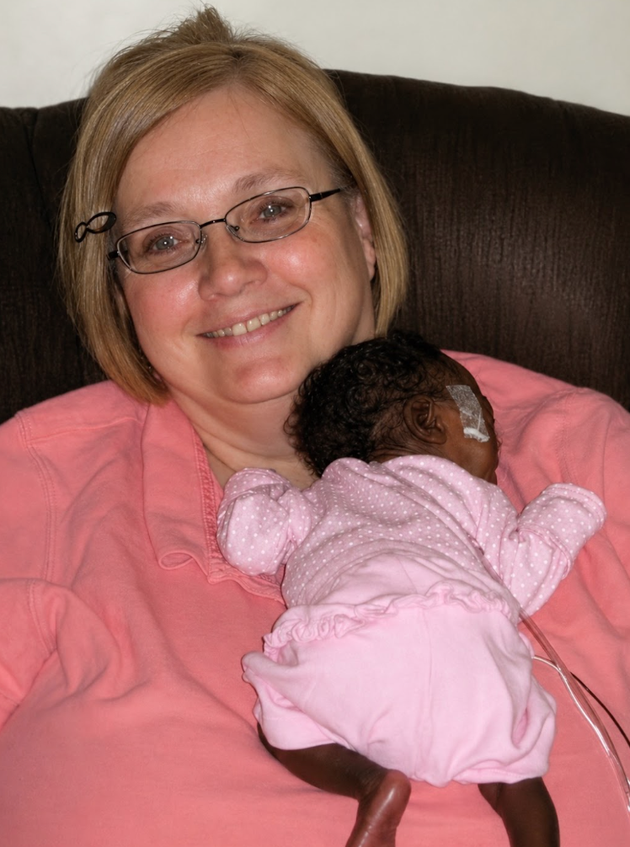
The author holding 2-month-old Jayden in 2009.Courtesy of Judy Wright
Four days later, we drove to the hospital. The building rose from the hill in gray stone. Inside, everything was polished. Bright. Controlled.
We scrubbed our hands at the sinks outside the NICU, up to our elbows, the sharp scent of disinfectant catching in my throat. Laminated signs instructed each movement, step by step. John pressed the buzzer with his elbow. The door opened with a low hum.
Also Read: Doctors Expected My Son To Die. In My Rush To Prove Them Wrong, I Made A Serious Error.
The room was filled with light and machines. Rows of incubators lined the walls, each one holding a small, separate world. Monitors blinked. Alarms sounded and were silenced. Nurses moved quickly, efficiently.
A nurse began to speak. A caseworker joined her. Words gathered. Twenty-seven diagnoses … blind, deaf, insulin dependent. She was born without skin on her hands or feet. Numbers rising and falling without pattern.
John took notes. He wrote slowly, deliberately, as if precision could keep this baby safe. I nodded, but I wasn’t listening anymore. I needed to see her. Not the monitors. Not the chart. Her.
We passed incubators with small blankets, stuffed animals, handwritten names. Signs of people who came and went. At the far end of the room, in a dim corner, the nurse stopped.
“There,” she said.
The incubator sat apart from the others. No decorations. No name.
Inside, a small shape lay wrapped tightly in a faded hospital blanket. Wires slipped out from beneath the folds. A thin tube curved beneath her nose. Someone had placed a tiny green bow in her dark hair. She was on her side, her hands tucked beneath her chin, sleeping.
Advertisement
John stood beside me, still. I tried to steady my hands. The nurse kept talking.
Two hours after we scrubbed in, the nurse opened the incubator.
I reached in carefully, aware of every wire, every small connection. She was lighter than I expected. My hands adjusted without thinking, finding the places that would support her.
Just hold her.
I sat in the wooden rocker beside the incubator, its cushion worn beneath me. Her body melted into mine. Her breathing was quick, shallow. In that room, everything was measured. Ounces. Milliliters. Numbers on a screen. Against my chest, her body softened.
I don’t know how long I sat there. It was long enough for the nurses to gather near the incubator across the row. Long enough for the room to grow quieter around us. She had stopped flinching. Her breathing slowed under my hand. I kept thinking about the green bow in her hair.
I went back every day to learn her care until she was ready to come home. Until I was.
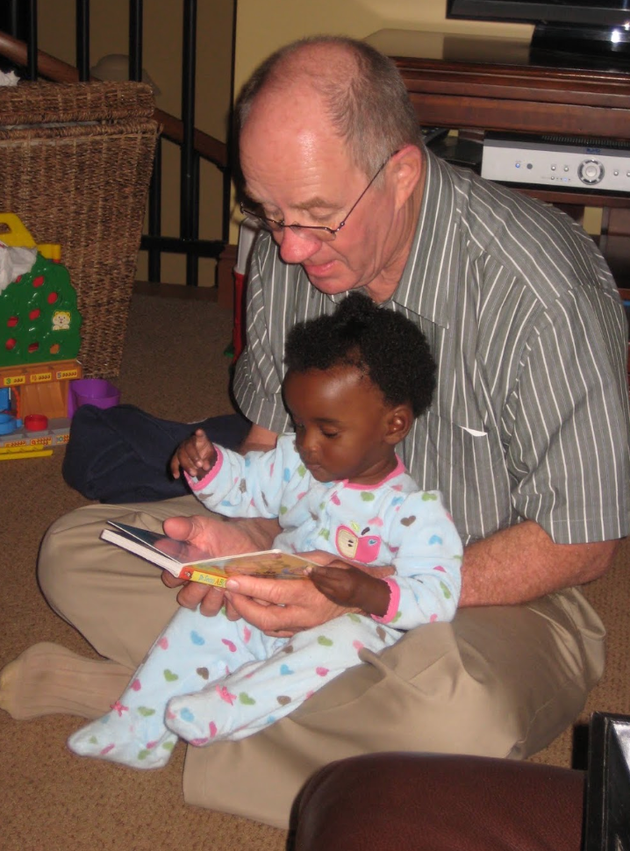
The author's husband, John, holding 15-month-old Jayden in 2010.Courtesy of Judy Wright
Like this article? Keep independent journalism alive. Support HuffPost.
We brought her home 10 days later. Then we learned a rhythm that left little room for anything else. Diaper. Reading. Injection. Feeding. It continued that way every two hours, day and night.
She was held — almost without interruption, from the night we brought her home. The living room arranged itself around her. The rocker in the corner. The oxygen tank beside it. The changing table three steps away. Seven feet of tubing defined the edges of our world. I hurried through using the bathroom. Then to the kitchen, drawing insulin into the syringe in the light of the refrigerator. I’d try to fill two bottles if I could. The alarm told me when I’d been gone too long.
I kept a spiral notebook next to me. I documented everything: times, doses, numbers, ounces. Not because I was trained to, but because I was afraid not to.
I set her down one night long enough to get to the bathroom. The alarm screamed before I reached the door. I ran back. She was still, silent in the dark. I picked her up, patted her back, and counted. She breathed. I wrote the number down. I sat with her against my chest until the room quieted again. Then I started over.
At night, the alarm didn’t ease into the room, it broke it open. Sometimes the alarm was wrong. Sometimes it wasn’t. There were nights I reached for her before I was awake, my hands moving ahead of thought, counting breaths before I could see her face.
I ate crackers in the dark. Drank the melted ice from my iced tea. I didn’t always brush my teeth. I didn’t know when the day started ... or ended.
The lancet was thin, but she still flinched. It punctured heel after heel, until her skin grew hard to the touch. A drop of blood, a number on the meter, a decision to make. In my mind, I mapped out a grid on her tiny thighs so I wouldn’t inject the insulin in the same place twice.
Each morning, I would look at her, half expecting something to be different. And then she would open her eyes. And we would begin again.
Weeks passed. Then months. The oxygen tubing disappeared. The alarms stopped. The spiral notebook stayed. Eventually, leaving the house didn’t feel like an emergency. We had stopped measuring life in hours.
One day in the hallway before church, I met the woman who would become her forever mama. It turned out her forever father had been our pastor all along. Jayden was immediately, uncommonly comfortable in Callie’s arms. And Callie was comfortable handing her back to me.
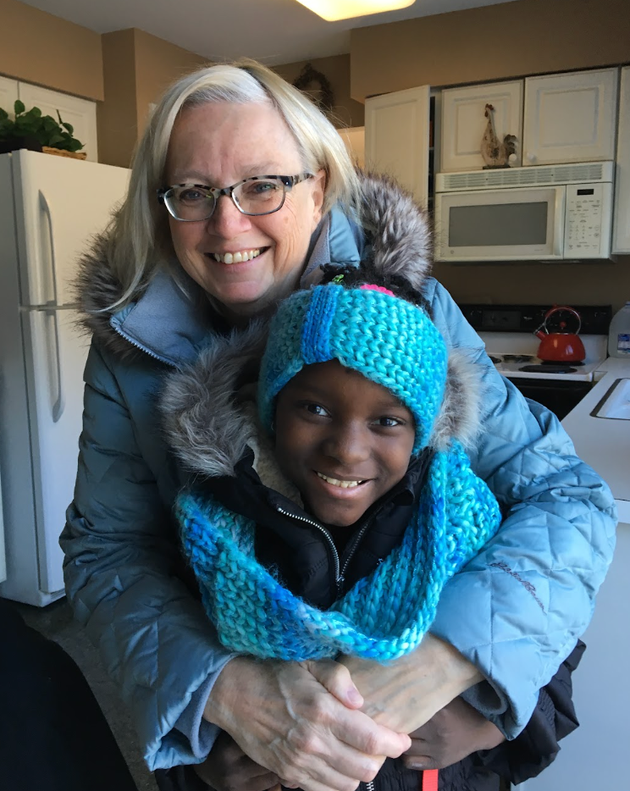
The author hugging 9-year-old Jayden in 2018.Courtesy of Judy Wright
We never knew how long Jayden would stay with us. That’s what foster care asks: not permanence, but presence. The willingness to love a child fully while knowing the story may belong to someone else.
People sometimes ask what fostering 55 children taught me. I never know how to answer that in a sentence. Every child leaves something different behind. But when I think about Jayden, I always come back to the same moment. The phone call. The request.
Would you please just hold her until she dies?
At the time, it sounded like a question about death. Now, years later, I think it was really a question about presence.
Foster care doesn’t promise certainty. You don’t know how long a child will stay. Most of the time, you don’t even know what tomorrow will look like.
You only know that a child needs someone today.
That’s what Jayden taught me: not how to know what’s coming, just how to show up anyway.
Jayden just turned 17. She can see and hear, but she remains insulin-dependent because she was born without a pancreas. She continues to navigate some health challenges, but she is living her life.She wants to be a park ranger. A few weeks ago, she read the pages about the NICU. She shook her head. “You wrote everything down.”
No one spoke about birthdays then — only about getting her through the next few hours.
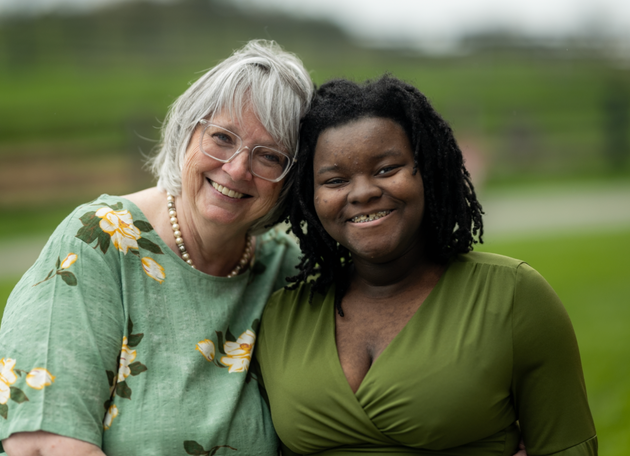
The author (left) with 17-year-old Jayden in 2026.Photo by Brian Craig Photography
This year, before our celebration of her birth, Jayden saw what I was wearing and ran home to change into a green dress so we would match.
The next day, a lamb was born in the barn. Jayden picked it up gently, holding the shaking lamb close against her chest. She rubbed the space between its ears with her thumb until it settled.
Then she looked up at me.
“Let’s name her Judy,” she said.
Seventeen years later, I still think about that question.
Not how long she would live.
Who would hold her if we said no.
Judy Wright is a foster mother, caregiver and advocate whose life has been shaped by the demanding, ordinary work of staying. After raising four children of their own, Judy and her now-late husband John entered Michigan’s foster care system. Over 12 years, their home became a place of readiness for 55 children, many of them medically fragile. Judy learned to advocate inside systems that often failed to see children clearly and to love without guarantees. In 2012, Judy and John were named Michigan Foster Parents of the Year by the Michigan Supreme Court. Their work continues through the John and Judy Wright Scholarship, established to support youth in higher education through the Ennis Center for Children. Her book, Just Hold Her: A Foster Mother’s Memoir of Medicine, Caregiving, and the Long Nights Together, is drawn directly from the spiral notebooks she kept during a two-year vigil for a medically fragile infant. A portion of the book’s proceeds supports their legacy scholarship. She writes regularly at Judy’s Notebook on Substack. For more information visit justholdher.com.
Do you have a compelling personal story you’d like to see published on HuffPost? Find out what we’re looking for here and send us a pitch at pitch@huffpost.com.
Related... -
I Tried Hiding The Truth About My Adult Son — But Lying Became Too Exhausting. Here’s What I Want You To Know.
I Suffered A Brutal Betrayal From My Ex-Husband. A Year Later, I Got A Facebook Message That Blew My World Open.
I Cheated On My Wife. Years Later I Got The Chance To Redeem Myself, But In The Most Awful Way.
Read the original on HuffPost
Source: “AOL Breaking”
