


Roger Goodell has 'no doubt' NFL teams will live abroad – but should he think bigger?
Roger Goodell has 'no doubt' NFL teams will live abroad – but should he think bigger?

Nate Davis, USA TODAYThu, August 20, 2026 at 10:32 AM UTC
10
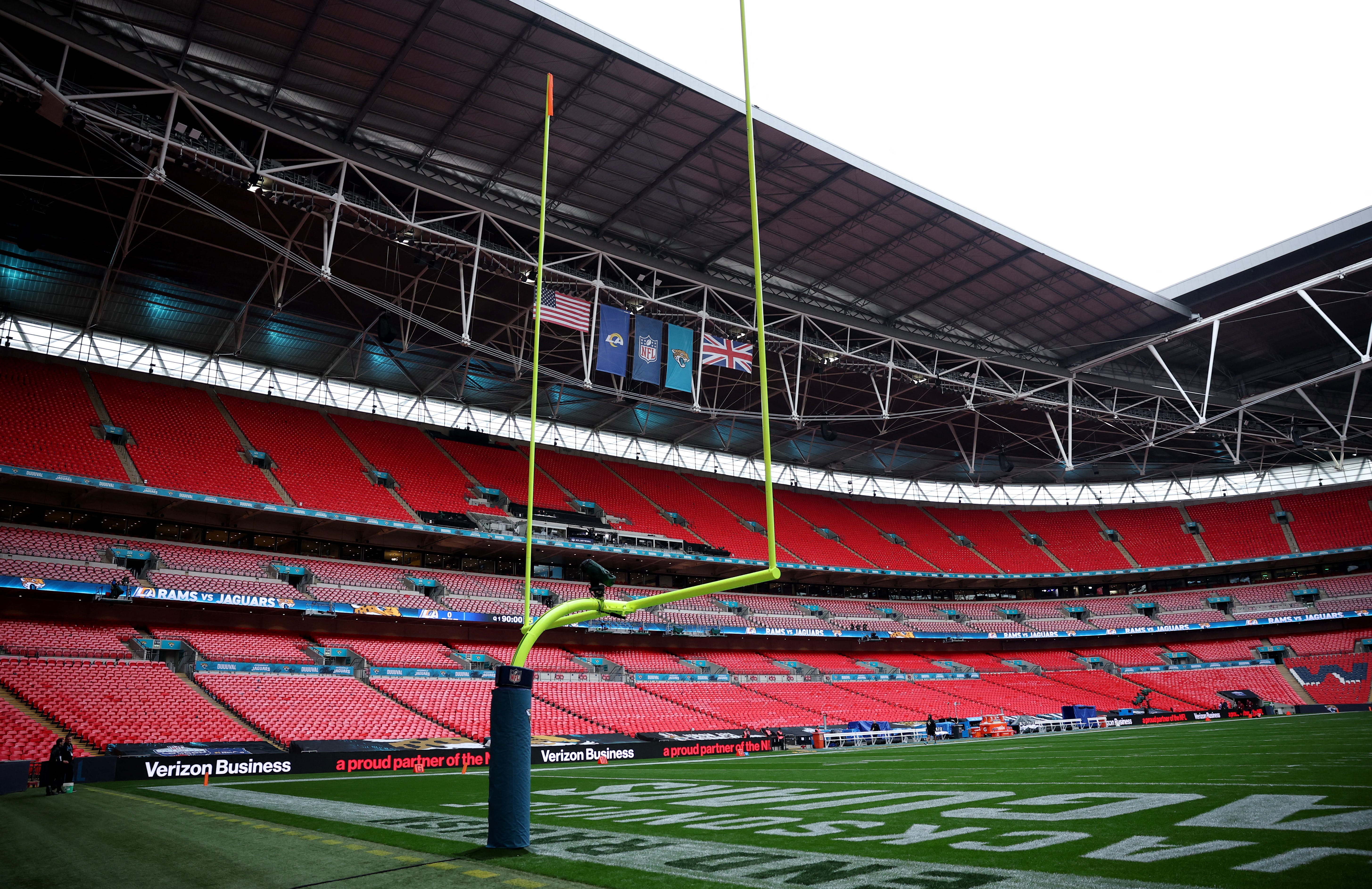
The NFL’s ever-growing international footprint could soon be on the verge of a more permanent foothold – and maybe more.
League Commissioner Roger Goodell recently told former New York Giants defensive lineman Markus Kuhn and the German media outlet RTL/ntv that, "at some point, there will be NFL teams outside the USA," adding, "I have no doubt that this will happen one day."
It’s a telling admission from Goodell, who’s typically tamped down such speculation while touting the league’s desire to continue feeding its growing interest abroad with an expanded inventory of games – the NFL will play a record nine international dates during the 2026 season, including its regular-season debuts in Melbourne, Rio de Janeiro and Paris.
And despite a historic reluctance to indulge the idea of staging the Super Bowl outside U.S. borders, Goodell also gave that notion some oxygen, telling Kuhn: "There are definitely international cities that could host something like that.
"But we would like to see an NFL team in such a city first."
Goodell’s revelations aren’t necessarily shocking given the NFL’s perpetual desire to increase its revenue streams. And fueling its international growth – in terms of the physical product, interest of foreign fans and additional broadcast opportunities – is probably the most logical vehicle to further that objective given the relative saturation on those fronts domestically.
Yet his comments do beg these five questions should the league put down roots outside of America:
1. Where would the NFL play an international Super Bowl?
It’s hard to imagine an answer other than London, which has two NFL-caliber venues − Tottenham Hotspur Stadium and Wembley Stadium, the latter with room for roughly 90,000 fans. The city has also essentially served as the league’s international hub since 2007, when the Giants and Miami Dolphins played the first regular-season game outside of North America. With the exception of 2020, when the world was on lockdown during the COVID-19 pandemic, the NFL has returned to London every year since and played multiple games there annually since 2013. The United Kingdom has the fan base, infrastructure, logistical means to handle a large influx of visitors and ability to handle the vast security requirements Super Sunday demands. And a kickoff time of 1:30 p.m. locally would translate to 6:30 p.m. ET, the typical time Super Bowls start – meaning neither the teams involved nor the American market would be especially thrown off from a timing perspective.
2. Where would the NFL base an international team … or teams?
London would likely be the same answer, essentially for the aforementioned reasons – including the fact that games there have become something of a normal endeavor in NFL circles.
"In the old days, quote unquote, we really tried to learn about the inconvenience or the additional travel considerations for international games," NFL VP of broadcast planning Mike North told the Cincinnati Bengals’ website earlier this year. "I know it's not quite routine, but it's getting to the point where it's pretty routine. You play an afternoon (game) over there, it's morning over here, you're back in the facility by what? Midnight (on) Sunday night? That's better than if it's played out in Seattle or Los Angeles."
Advertisement
“That's the new normal for us."
Having just one team in Europe would seemingly come with an unfair logistical strain. A flight from London merely to New York is roughly 3,500 miles – which is about 20% longer than the distance from Seattle to Miami, currently the NFL cities that are furthest apart geographically. Imagine sending a London team to Los Angeles, maybe twice in a season if the schedule fell that way. Travel could be curbed by giving a European-based team longer homestands and corresponding road trips, but that would still force those players to be away from their home routine and families for extended periods of time, even if the relative travel burden was reduced. It seems like too much of a competitive disadvantage to place on one franchise.
The alternate solution could be to base an entire division in Europe. Two teams in London? Two teams in Germany (Frankfurt, Munich)? Maybe one in Spain instead? The league is returning to Madrid this season after what seemed a smashing debut in 2025. And Real Madrid’s Bernabéu is arguably the world’s most advanced stadium – including an elaborate field management system, retractable roof and 360-degree video screens among its features. Having four teams in Europe would also lend itself to a permanent broadcast window on Sunday mornings − and that means moneybags. And remember, when the NFL could no longer ignore a vacant Los Angeles market, it returned with multiple teams, not just one.
Of course, a full division abroad creates other issues – namely expanding the league to 36 teams, the dilution of the talent pool that would follow and all of the problems it would create, starting with the realignment and scheduling perspectives. It could also be too deep a dive to take as opposed to using one club as an international bellwether.
3. Could other international cities make more sense?
Probably not.
Games in Brazil don’t create problems from a time zone (read: kickoff) perspective, but the flights there are roughly doubly long compared to Europe. The Buffalo Bills played a game annually in Toronto, Canada’s most populous city, from 2008 to 2013. But they haven’t been back since – the final two games not even close to filling capacity at the Rogers Centre − though those were the pre-Josh Allen days … yet also back when the since-refurbished SkyDome could accommodate 50,000 fans. After a four-year hiatus, the league will return to Mexico City this year for its sixth regular-season game there since 2005. Despite ardent Mexican fan support and a generally closer proximity to major American cities, basing a team there would likely come with increased security ramifications as well as a far more-pronounced language barrier than London or even other European countries, where English is spoken far more commonly.
4. Would the NFL just move the Jaguars to London?
Though the franchise has seemingly had one paw in the U.K. forever – the Jags have played 14 games in London, giving them at least double the international appearances of any other NFL team – it seems unlikely to permanently relocate at this point. Though owner Shad Khan also has the Premier League’s Fulham F.C., which is based in London, as part of his portfolio, the Jaguars moved into their new, $120 million training facility just three years ago. Meanwhile, Jacksonville’s EverBank Stadium is in the midst of upgrades approximating $1.5 billion that should be finished by the start of the 2028 season.
5. Will NFL players want to play for international teams?
It’s a complex question, one likely to evolve over time and which has no one-size-fits-all answer. But unlike international basketball, soccer or hockey stars, American football players are (currently) unaccustomed to playing overseas. Unfamiliar languages, customs, exchange rates and taxes have been vexing for expat American athletes in the past – read up on the long-relocated Montreal Expos.
But while the NFL Players Association would certainly have to be on board with the notion of a squad(s) abroad, if it means expansion – ergo, more jobs for players – that’s a strong enticement for any union. Still, it could be challenging for teams in foreign locales to retain and recruit top players.
All the NFL news on and off the field. Sign up for USA TODAY's 4th and Monday newsletter.
This article originally appeared on USA TODAY: Roger Goodell has 'no doubt' NFL teams will live abroad – but should he think bigger?
Source: “AOL Sports”
