


Netflix bet big on AI with new movie — but did it help or hinder?
Netflix bet big on AI with new movie — but did it help or hinder?

Kevin E G PerryWed, October 14, 2026 at 1:43 PM UTC
0
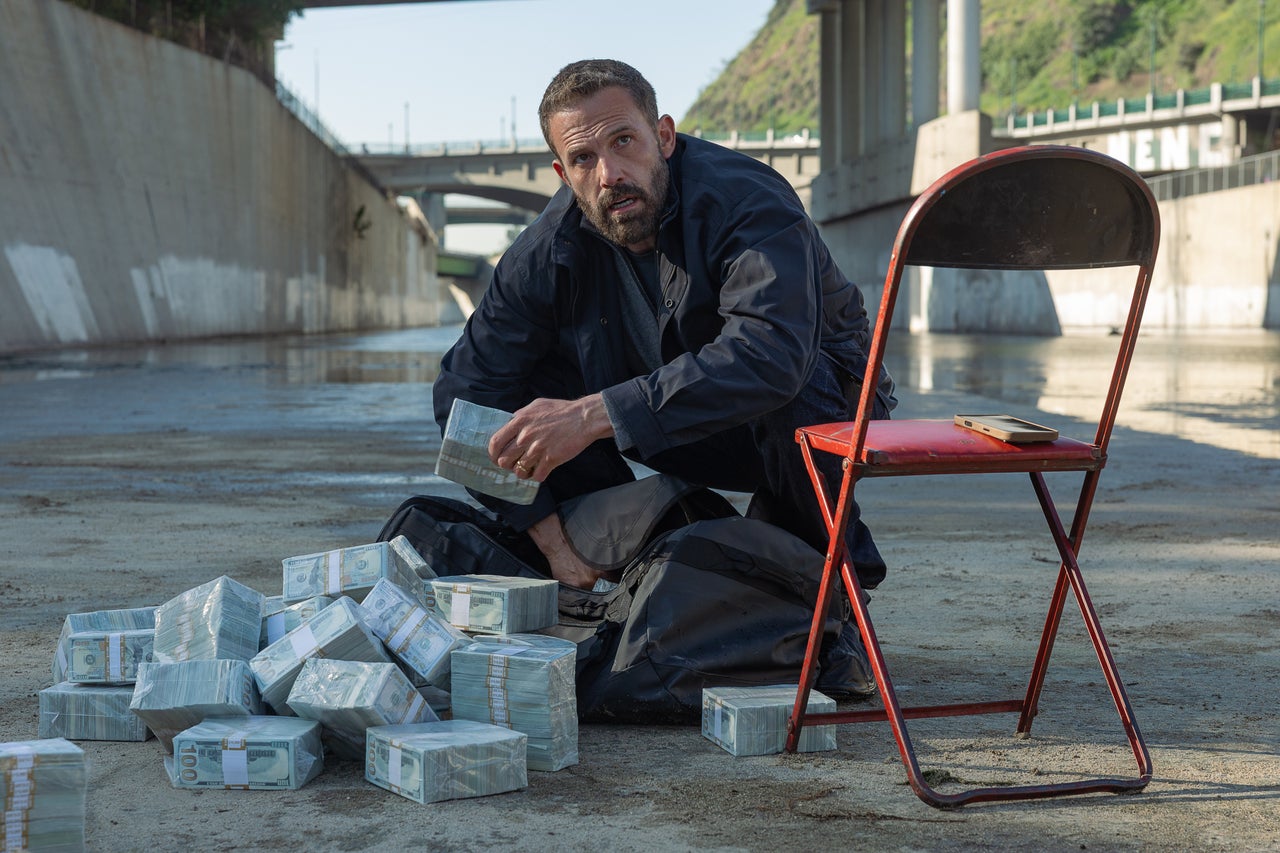
Sometimes a single movie scene transcends its source material. As soon as you see it, you know it’ll be the only thing anybody wants to talk about afterwards. So it is with Ben Affleck’s Animals, although not for reasons that will please the film’s director and star.
The scene in question appears late in the new Netflix thriller, when a kidnapped child is unceremoniously booted over the concrete side of a Los Angeles river channel in a little red trailer. The poor boy careens down the steep incline before striking the ground and being catapulted upwards to soar majestically through the air and into a sprinting Affleck’s waiting arms, in defiance of all earthly physics.
This moment of pure, unintended slapstick has already gone viral on social media, where it has been widely and unflatteringly compared to the oft-ridiculed scene from 1988’s Mac & Me that Paul Rudd used to use to troll Conan O’Brien during his late night appearances, where a child in a wheelchair goes over a cliff and lands in a lake. Not exactly the sort of reference point Affleck would have been aiming for with the dramatic denouement of his return to directing.
How did such a preposterous sequence end up on our screens? The obvious culprit, it seems, is AI. Affleck has openly admitted to using AI during the production of Animals, announcing during a recent Bloomberg Screentime event that he used the technology for “lots of things” but refusing to be drawn on the specifics. “In my business, we’re trying to foster the illusion of reality, right?” he said. “It’s sort of like if you went to a magic show and the magician walked out and said, ‘Just before I start, I want you to know there’s another bunny under here. This guy’s a plant.’ It sort of ruins it, right?”
Warming to his point, Affleck went on to argue that Animals is exactly the sort of film that can showcase just how useful AI can be to filmmakers of all kinds. “I thought it was a good example because it’s a very human movie,” he said. “It’s not in space, it doesn’t have visual effects, but it allowed us to move in some cases more quickly, really mostly in post-production, to do things that otherwise we wouldn’t have been able to do.” Like, for example, make a little boy fly despite having his arms and legs bound together.
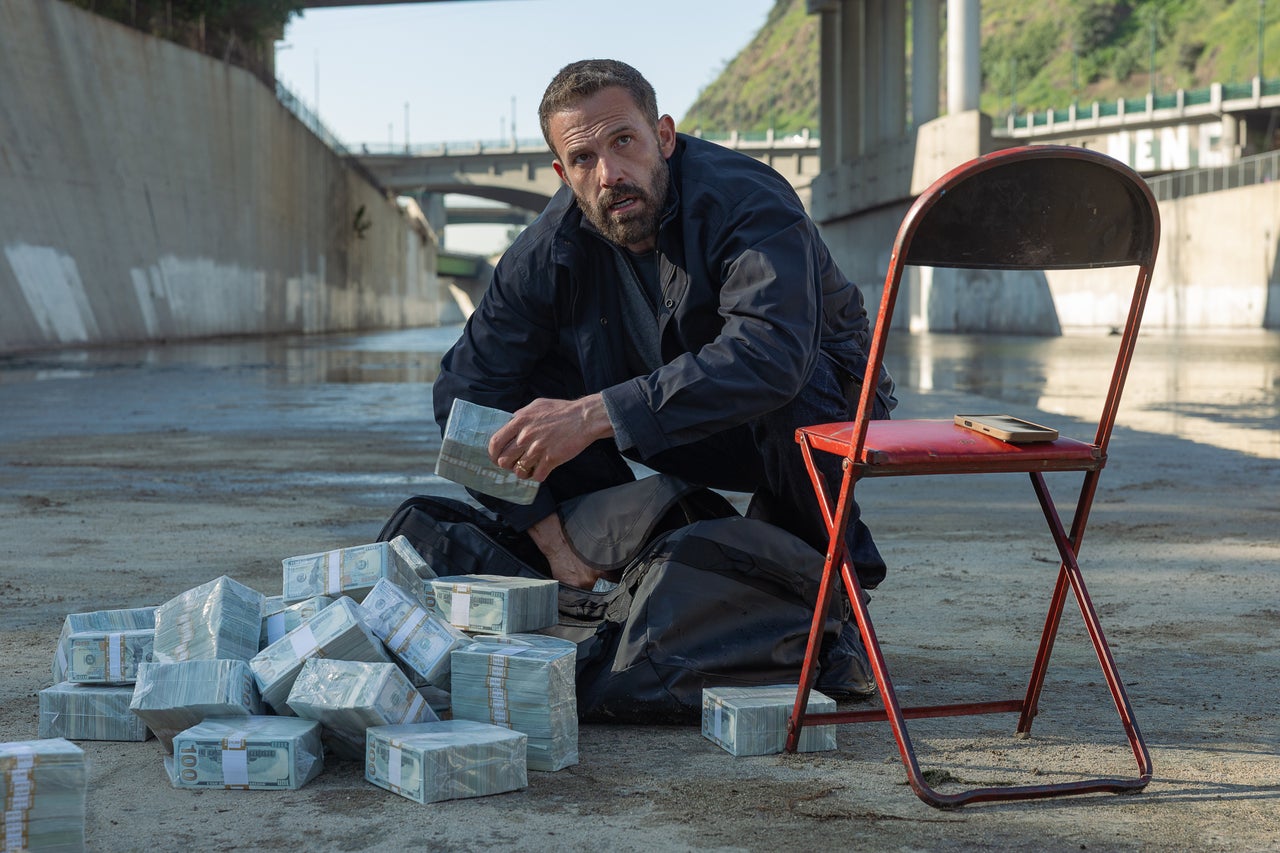
Ben Affleck in a scene from 'Animals' (not, as it might appear, counting the millions Netflix paid him for his AI company) (Netflix)
While that scene is the most egregious example, it’s not the only moment of AI sloppiness present in the final cut of the film. One eagle-eyed Instagram user pointed out that in the background of a seemingly ordinary shot of the Sunset Strip, a billboard advertising the Hulu show Paradise is reproduced with a tell-tale error: the show’s title now reads Parasise.
When it comes to Netflix’s use of AI, Affleck is more invested than the average director. Back in March this year, Netflix paid a cool $587 million to purchase InterPositive, an AI-powered filmmaking technology company the actor co-founded in 2022.
Advertisement
As part of the deal, Affleck joined Netflix as a senior advisor. In a statement at the time, Affleck revealed that he and his company had filmed “a proprietary dataset on a controlled soundstage” that was used to build an AI model that would be able to help filmmakers perform tasks such as filling in backgrounds or adjusting lighting.
If Animals was intended to prove the utility of the new technology, Netflix might find themselves wondering whether spending over half a billion dollars to create laughable scenes that draw comparisons to cheap ‘80s kids fodder like Mac & Me was really worth it. Surely a practical sequence, even if it took more time to produce, would have given the film’s climax a touch more gravitas?
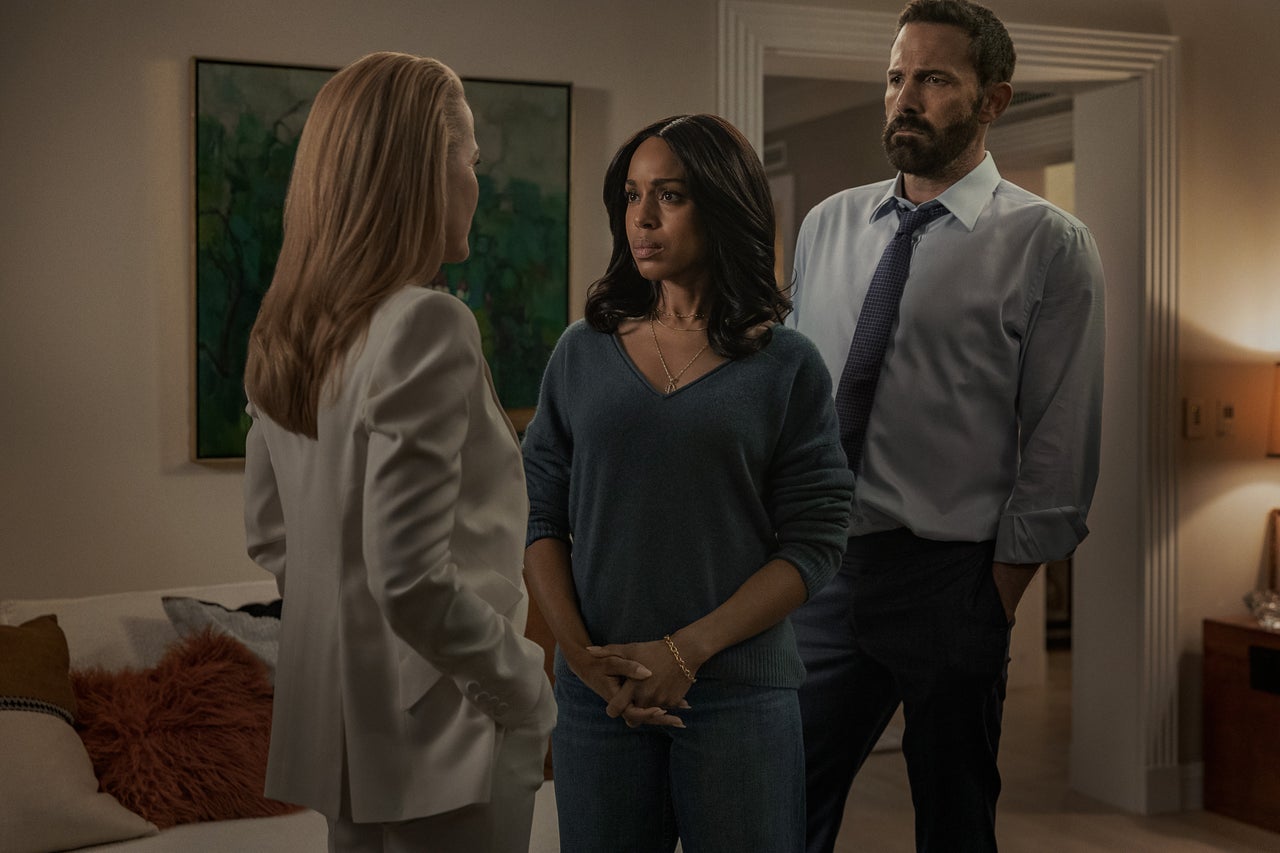
Even acting heavyweights Gillian Anderson and Kerry Washington struggle to elevate Ben Affleck's Netflix thriller 'Animals' (Netflix)
Worryingly, the streaming giant may simply not care. Back in April, Affleck and his old pal Matt Damon found themselves in hot water while promoting their Netflix film The Rip after openly discussing the idea that the streamer believes many of its users are “second-screen viewers” who need simple plots to be repeatedly spelled out for them. In that context, background spelling mistakes and reality-bending special effects are of little consequence.
Certainly the problems with Animals go well beyond its shoddy use of AI. The film stars Affleck as a man running for mayor of Los Angeles when a kidnapper goes after his son, and features a compelling twist lifted directly from Akira Kurosawa’s 1963 classic of Japanese cinema, High and Low. The provocative conceit is ripe for a remake — or at least it would have been if Spike Lee hadn’t got there first just a year ago with the Denzel Washington-starring Highest 2 Lowest.
Lee’s film was a hit with critics, picking up an aggregated critical score of 83 percent on Rotten Tomatoes — more than can be said for Animals which has been left rolling around in the muck with a measly 35 percent. Notably it isn’t the use of AI that seems to be turning reviewers off, but the lifeless acting (not even heavyweights Gillian Anderson and Kerry Washington could help this film), clunky, exposition-heavy dialogue and an overall lack of care or nuance.
Perhaps tellingly, there is one moment in Animals where the new technology is mentioned in passing. In a scene where Affleck’s character receives a threatening phone call, he tells his wife that he’s unable to identify the kidnapper because his voice is “disguised, it’s AI.”
In the future, Affleck might heed the message buried in his own storytelling: Good guys pay attention to the details, bad guys use AI.
Source: “AOL Entertainment”
