


I reviewed the Army’s new Boxer and it stopped me in my tracks
I reviewed the Army’s new Boxer and it stopped me in my tracks

Hamish de Bretton-GordonThu, July 16, 2026 at 5:00 AM UTC
0
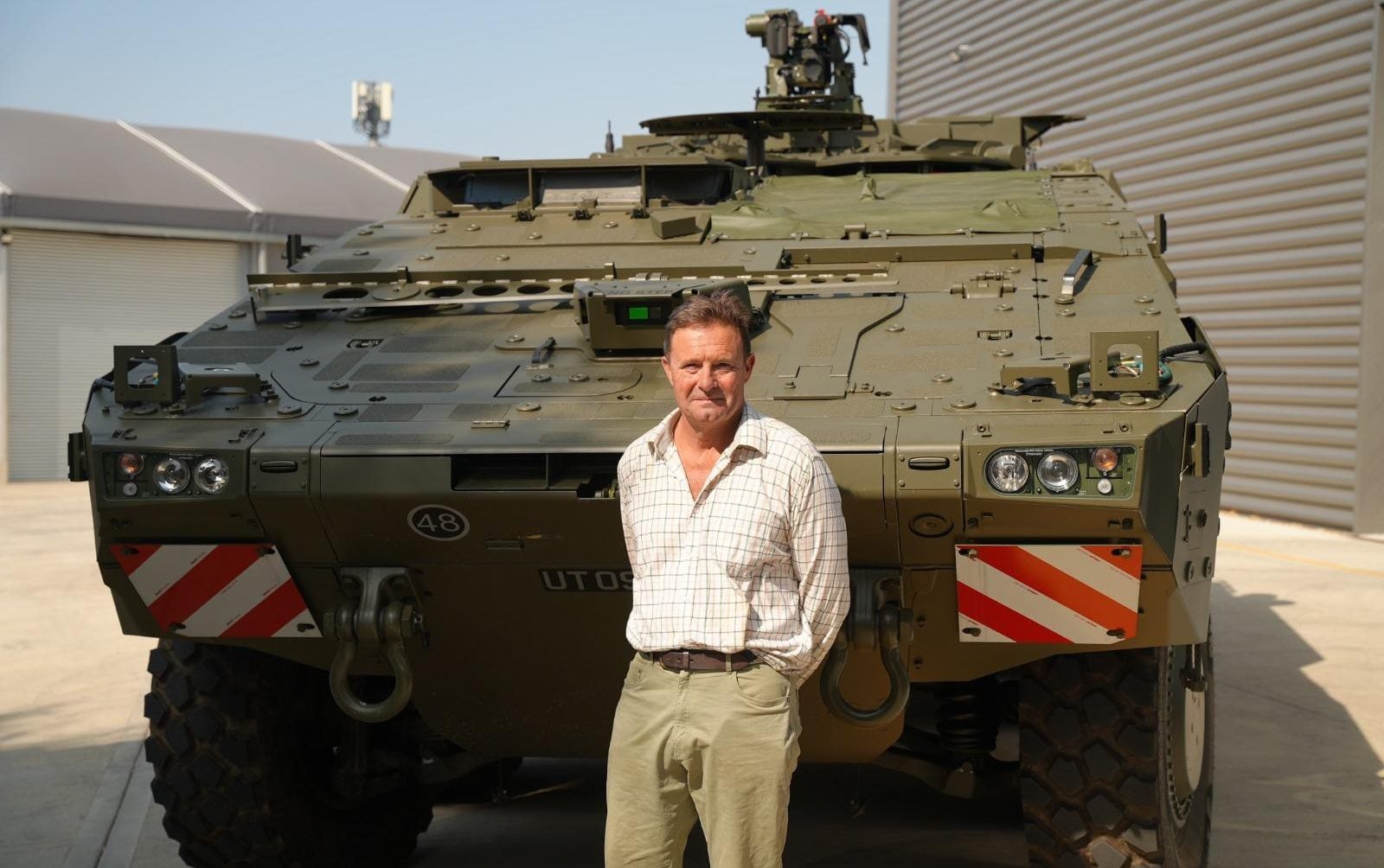
The versatility and speed of the Boxer impressed Hamish de Bretton-Gordon
The holy trinity of armoured warfare has remained unchanged since tanks first dominated the battlefield at Cambrai in 1917: firepower, protection and mobility. Every successful armoured vehicle is judged by how well it balances these three essential qualities.
Today, Britain has a new ABC of armoured capability – Ajax, Boxer and Challenger 3 – and having personally put all three through their paces, I believe they deserve to be assessed not only against that timeless formula but also against the demands of tomorrow’s battlefield.
Those demands are defined by the Strategic Defence Review and the Defence Investment Plan, both heavily influenced by the lessons emerging daily from Ukraine. Warfare is changing at an extraordinary pace. Victory no longer belongs simply to the force with the most firepower or the thickest armour. It belongs to the force that can find, decide and strike faster than its opponent.
That is precisely what the British Army’s Recce Strike concept is designed to achieve. While deceptively straightforward in principle, it represents a profound shift in the way land warfare is conducted. Intelligence, reconnaissance, electronic warfare, drones, AI-assisted targeting and long-range precision fires are fused into a single digital ecosystem. The objective is simple: compress the kill-chain from hours to minutes, and increasingly from minutes to seconds.
Ajax forms the reconnaissance and surveillance backbone of this network. It gathers information from its own sophisticated sensors while integrating data from drones, autonomous systems and human intelligence sources. Challenger 3 provides devastating, strongly protected heavy firepower. Boxer, meanwhile, delivers protected mobility across the force while acting as another node in this increasingly connected battlefield.
Having already put Ajax and Challenger 3 through their paces, it was Boxer’s turn for a Jeremy Clarkson-style day at the track.
I confess I approached Boxer with some scepticism. Like many armoured soldiers of my generation, I have long believed that serious military mobility demands tracks. Only tracks spread the weight of an armoured combat vehicle over a wide area, often resulting in lower ground pressure than that of a dismounted soldier’s boot despite the vehicle’s great weight. Wheels cannot do this: even using lower-pressure tyres to spread the load they cannot match tracks on the matter of ground pressure and off-road mobility. But after spending time putting Boxer through its paces at Millbrook, I am prepared to revise that opinion. Boxer may well be the exception that proves the rule.
There are other things I liked. For perhaps the first time in decades, the British Army has acquired an armoured vehicle that genuinely feels overpowered rather than underpowered. Boxer’s Rolls-Royce MTU V8 engine produces close to 1,000 horsepower, propelling this 36-ton, eight-wheel-drive vehicle with remarkable ease. Around Millbrook’s high-speed circuit we approached 80mph, often having to slow down simply to allow the camera vehicle to keep pace.
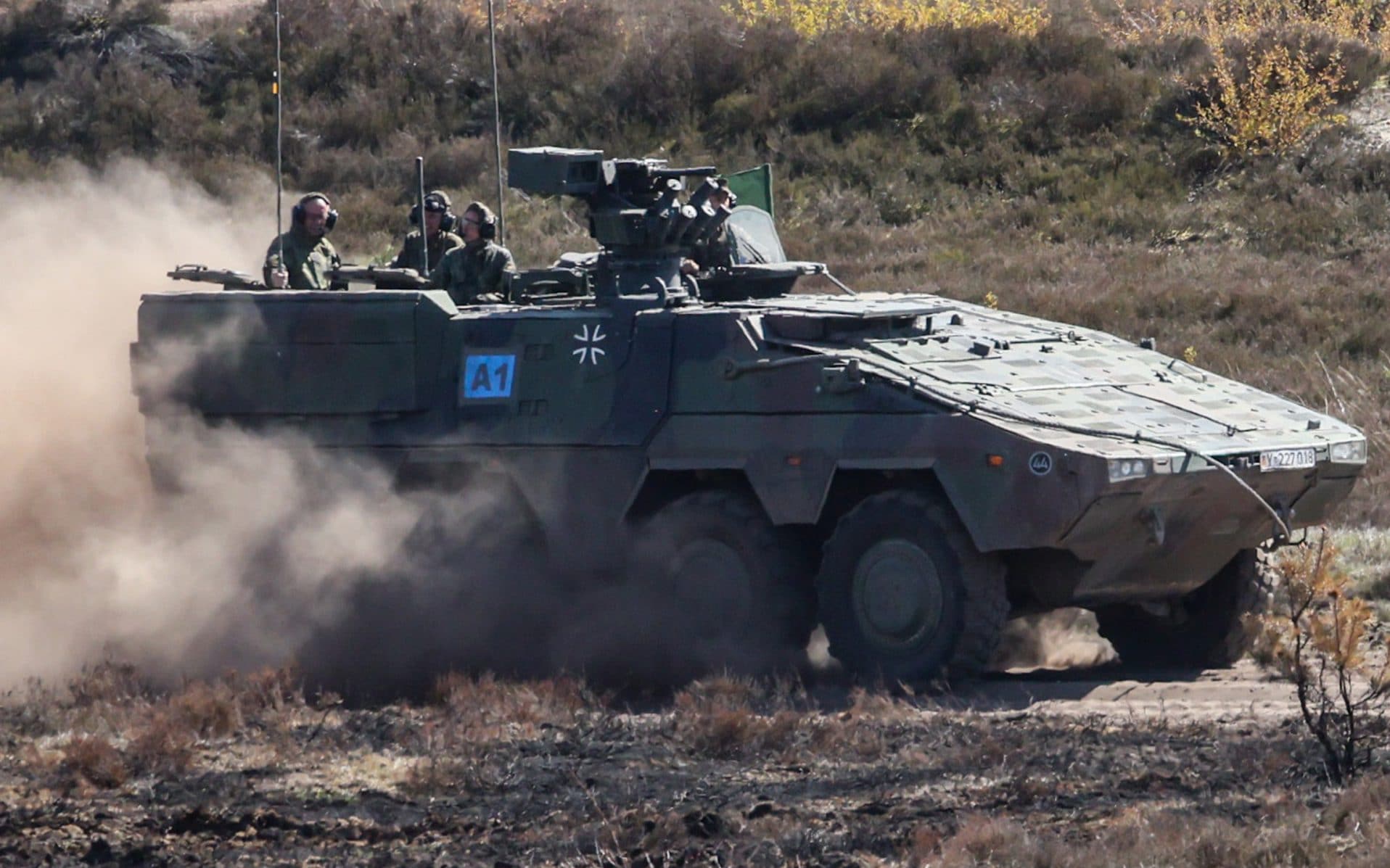
With a range approaching 800 miles, the Boxer could deploy from the UK to Estonia with minimal refuelling
Performance is only part of the story. Boxer’s strategic mobility is equally impressive. With a range approaching 800 miles, it could deploy from the UK to Estonia with minimal refuelling while carrying a fully equipped infantry section in considerable comfort. It is perhaps the greatest advantage of wheels over tracks: Boxer can self-deploy by road, whereas tracked vehicles like Ajax and Challenger 3 must move by tank transporter or rail car until they are approaching the battlefield. The British Army only has 92 tank transporters, operated by civilian reservists and provided under a private finance initiative (PFI) contract, so this is important.
Advertisement
Boxer’s greatest strength, however, may be its versatility. Its modular design allows different mission modules to be swapped on to the common chassis in about 40 minutes. Infantry carrier, command post, ambulance, recovery vehicle or the formidable RCH 155mm remotely operated artillery piece all share the same automotive platform. This dramatically simplifies logistics while giving commanders enormous flexibility.
The Australians and Germans have shown what is possible by fitting infantry-carrying Boxers with powerful 30mm cannons, transforming them into Infantry Fighting Vehicles. Britain should seriously consider following suit. It would provide a highly credible successor to our ageing Warrior IFV without creating another expensive standalone fleet.
Even more intriguing is the platform’s growth potential. Trials have already demonstrated the integration of a 105mm tank gun, while a full-bore 120mm weapon of the type fitted to Nato main battle tanks appears increasingly feasible. With Britain planning for only 148 Challenger 3 tanks, a 120mm-armed Boxer variant could offer an affordable way of generating additional shock action mass without incurring the cost of another main battle tank programme.
Cost remains an uncomfortable subject within the Ministry of Defence, but value for money cannot be ignored. Broadly speaking, Boxer costs about half as much as Ajax and roughly a third of the price of Challenger 3. In an era of constrained defence budgets, that represents a compelling proposition.
More importantly, Boxer has already demonstrated its credibility under operational conditions. The 155mm artillery variant is proving its value in support of Ukraine, while German Boxers earned an impressive reputation during operations in Afghanistan. In one notable incident, a vehicle survived a heavy roadside bomb strike, protected its crew and continued its mission. That is exactly the sort of resilience soldiers need from modern armoured vehicles.

Hamish approached Boxer with some scepticism but it exceeded his expectations
There is another reason to welcome Boxer. Although Germany’s Rheinmetall now leads the programme, its origins are rooted in British engineering, and production has returned to the UK. Thousands of jobs across British industry are supported by the programme, strengthening both national resilience and sovereign industrial capability. Defence spending should never be viewed simply as a cost. Properly directed, it is an investment in national security, advanced manufacturing and economic growth.
After personally testing the next generation of British armoured vehicles, I am increasingly convinced that Ajax, Boxer and Challenger 3 provide the foundations of a highly credible future force. They combine firepower, protection and mobility with the digital connectivity that modern warfare demands. No fleet is perfect, and adaptation will always be necessary as technology evolves, but the British Army is entering this new era from a position of genuine strength.
Perhaps my biggest takeaway is also the simplest. I have spent much of my career believing that tracks were indispensable for serious armoured warfare. Boxer has challenged that assumption. On tomorrow’s battlefield, mobility is no longer defined solely by what lies beneath the vehicle, but by how effectively it can move, communicate and fight as part of an integrated force. On that measure, Boxer has exceeded my expectations.
Col Hamish de Bretton-Gordon commanded the 1st Royal Tank Regiment. His new book Tank Command is now available
Source: “AOL Money”
