


Healey eyes windfall tax on banks and oil companies
Healey eyes windfall tax on banks and oil companies

Camilla TurnerSat, August 29, 2026 at 7:16 PM UTC
0
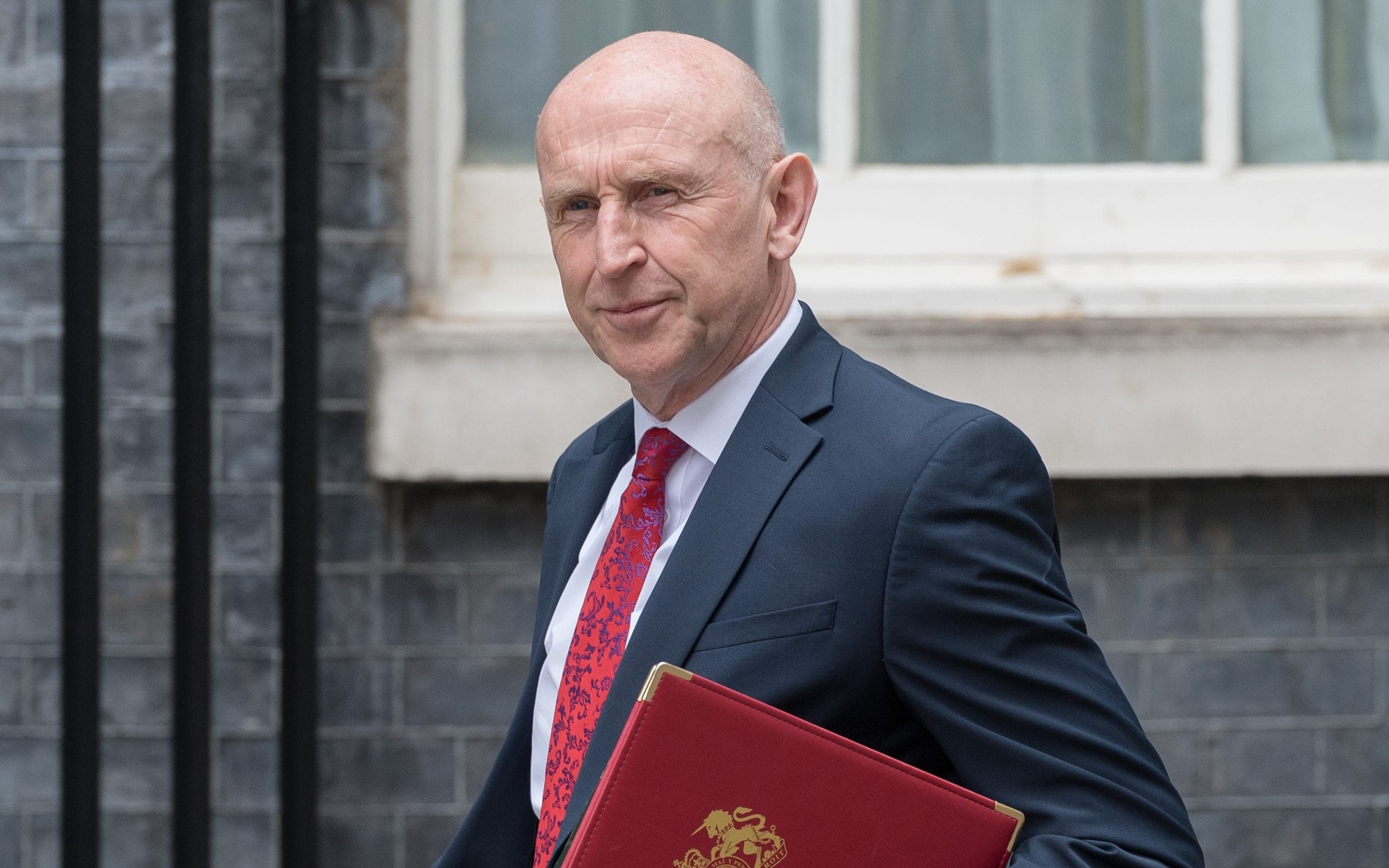
John Healey wants his Budget to be seen as a ‘low-key affair’ - Wiktor Szymanowicz/Future Publishing
John Healey is considering a windfall tax on banks and oil companies in his first Budget, The Telegraph understands.
Treasury officials are discussing both policies as they try to find ways to plug a £4.7bn hole in the public finances while seeking to avoid direct tax increases on individuals.
The Chancellor is understood to want next month’s Budget to be framed as low-key and to make sure that inevitable tax rises are much lower than those pushed through by Rachel Reeves, his predecessor.
Hitting companies while shielding individual taxpayers would allow Mr Healey to regain fiscal headroom damaged by high gilt rates and the impact of the war in Iran, while also raising a few billion pounds to spend on defence and other priorities.
Increasing taxes on banks, which have enjoyed substantial profits, was described by one official as “low-hanging fruit” that Andy Burnham, the Prime Minister, and his Chancellor would find hard to ignore, according to Bloomberg.
Treasury officials monitoring the economic fallout from the US-Iran war have noted that BP’s profits more than doubled between April and June because of elevated oil prices, leading some officials to propose increased taxes on the windfall for fossil fuel companies.

The war in Iran has pushed energy company profits higher - Sasan/AFP
One option under consideration would be for the Treasury to launch a time-limited “windfall” tax on banking profits, modelled on a similar policy applied to oil and gas giants since the start of the war in Ukraine. Mr Healey could also extend the windfall tax on the oil and gas sector beyond March 2030, and increase the levy.
The discussions over taxation come after Mr Burnham’s plan to force the embattled Thames Water into administration as a “week one” priority was shelved following an intervention by Treasury officials.

The ‘low-hanging fruit’ of a windfall tax on banks would be difficult for Andy Burnham to pass up, financial experts said - Diego Fedele/Getty Images
A source close to discussions told The Telegraph that, following some frank discussions with the Treasury, Downing Street backed down on plans to intervene to save the debt-laden water company.
“The Treasury position has never wavered – that there is less money to play with than we would like and we have to be really careful about spending taxpayers’ money,” the source said.
“There is an inter-Whitehall war going on between those who have to make the sums add up and the rhetoric.”
The source explained that the water industry “needs a huge amount of investment and it is operationally very stressed”, adding that the Treasury “knows that it is not a good use of taxpayer money. It is a very risky investment. The Treasury is holding firm”.
Treasury sources said they would not characterise the discussions over Thames Water as a “war” with Downing Street, suggesting instead that the discussions were a sign of a “well-functioning government”.
Mr Burnham’s belief that utilities should be under stronger public control had “not changed”, a government spokesman said.
“This Government is looking at how we can give the public more control and help keep bills as low as possible,” they added. “We’re bringing in tougher regulation, stronger enforcement and greater accountability, so water companies deliver for customers and the environment.”
Advertisement
UK Finance, the financial industry’s trade association, has urged Mr Healey not to launch any further taxes on banks or risk driving away investment from the City of London.
In a letter to the Chancellor, the sector warned against a “damaging” raid on the industry.
Treasury officials told The Telegraph that the Government kept bank taxes “under review”, to ensure the “objectives of growth and responsible fiscal policy are appropriately balanced”.
British banks already pay one of the highest tax rates in the world at nearly 47 per cent, according to UK Finance.
They pointed out that banking “accounts for over £1 in every £25 of economic output”, and that the UK tax environment played a “meaningful role in decisions about where individual banks invest, deploy capital and allocate jobs”.
Jamie Dimon, the chief executive of JP Morgan, has also warned Mr Healey that raising taxes on UK banks could trigger staff to move abroad. Sir Howard Davies, the former chairman of NatWest, has also cautioned Mr Burnham against the move, saying it risked sending banking activities abroad.
The top four UK banks have dramatically outperformed the rest of the economy in the past year, posting an average 21 per cent increase in profits in the first half of 2026 compared with the same period in 2025.
Since its introduction in May 2022, the oil and gas levy – officially called the energy profits levy – has raised £9.1bn.
Robin Allan, chairman of the Association of British Independent Exploration Companies, told The Telegraph that extending or increasing the levy on oil and gas companies “would be acts of economic madness”.
He added that it would “further damage the fragile economy of our domestic oil and gas industry” and said his group would write to the Treasury and seek a meeting with ministers to discuss it.
The Chancellor is also believed to be considering ways to borrow more to finance infrastructure in a manner that he could claim was compatible with the fiscal rules.
Sources close to Mr Healey said the Budget would focus on his priorities of fiscal stability and breathing space for people and businesses. Treasury sources have said the Budget will be a low-key affair, with several major policy decisions, such as welfare reform, postponed until next year.
They said they would not comment on speculation around tax policy ahead of the Budget.
A Treasury spokesman said: “The Chancellor is fully focused on his priorities, which will boost business, help with the cost of living and support people in every postcode.
“As has always been the case, decisions on tax are a matter for the Chancellor to set out at fiscal events, rather than routinely commenting on proposals made.”
Source: “AOL Money”
