


Common Problems With The Toyota Tundra Turbo V6 Engine (According To Owners)
Common Problems With The Toyota Tundra Turbo V6 Engine (According To Owners)

Casey CooperThu, July 16, 2026 at 1:45 AM UTC
0
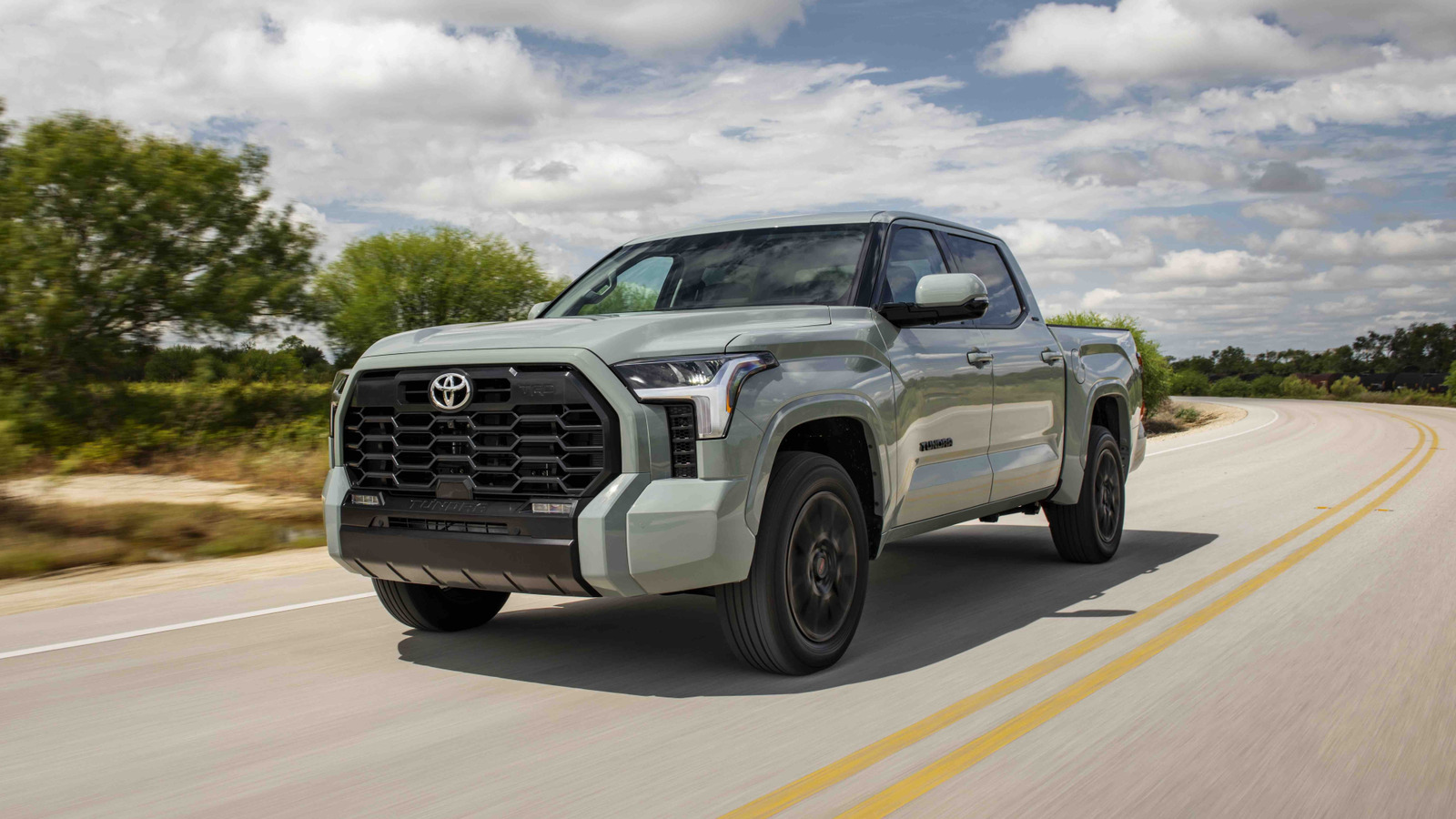
Grey Toyota Tundra driving down a country front 3/4 dynamic shot. - Toyota
2022 saw Toyota give its full-size pickup truck a major overhaul, with the biggest change coming in the form of its new powertrain. Much to many people's dismay, the beloved and longstanding V8 was snubbed for a new 3.5-liter twin-turbo V6. Unfortunately, for Toyota, its new engine did not receive the warm welcome they had hoped for, and with good reason. Soon after it was launched, the new powerplant was subject to serious scrutiny from owners and mechanics alike. Consequently, Toyota ended up recalling over 100,000 2022-2023 Tundra's and Lexus LX 600's because of a manufacturing fault that could result in full engine failure.
According to Toyota, debris left over from a machining step during the engine assembly process could remain inside the V35A-FTS engine. Over time, that debris could disrupt oil flow, cause rough idling, knocking, failure to start — or worse, a complete loss of power while driving. According to the National Highway Traffic Safety Administration (NHTSA), Toyota stated that there was an increased risk of crashing from sudden stalling due to the machining defect.
Toyota responded by offering affected owners with full engine replacements for no extra cost. However, questions around quality control and long-term reliability have persisted. Given the V6 engine replaced the famously indestructible V8, this high-profile mass recall left many questioning Toyota's legendary reputation for reliability.
Read more: 10 Mistakes You Might Be Making When Changing The Oil In Your Vehicle
Stalling, knocking, and engine failure top owner complaints
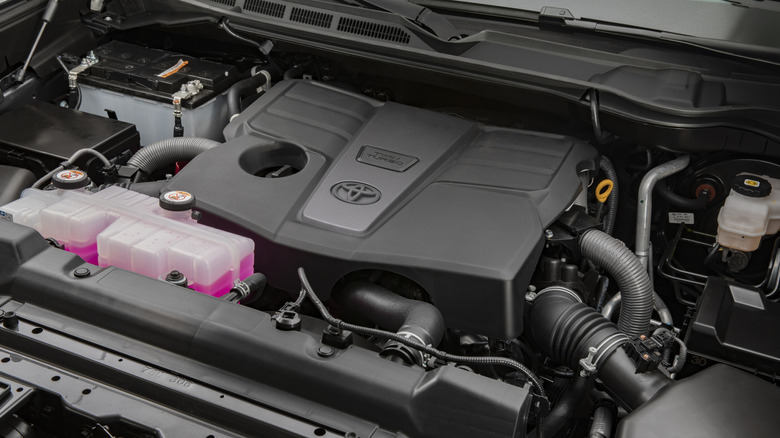
Close up shot of the Toyota Tundra engine bay with the V6 twin turbo engine. - Toyota
Beyond the official recall, Toyota Tundra owners have increasingly reported engine-related issues – even outside the VINs flagged by Toyota. On CarComplaints and the NHTSA website, dozens of third generation Tundra owners have reported sudden engine shutdowns, loud knocking noises, and violent shaking during operation. Concerningly, many of these problems have been occurring at really low mileages.
Advertisement
In one documented case, an owner stated their truck began vibrating before abruptly catching fire. Another owner reported losing power at highway speeds, forcing a dangerous roadside stop. These issues appear to be consistent with the problems identified in the recall, yet some affected vehicles have not been formally recalled. In forum discussions, owners have expressed their discontent and frustration towards dealers who were unable or unwilling to diagnose the issue or offer repairs. In several reports, owners said they were told no codes appeared in the diagnostics, making repairs difficult unless the engine completely failed.
Post-recall Tundras still face reliability questions
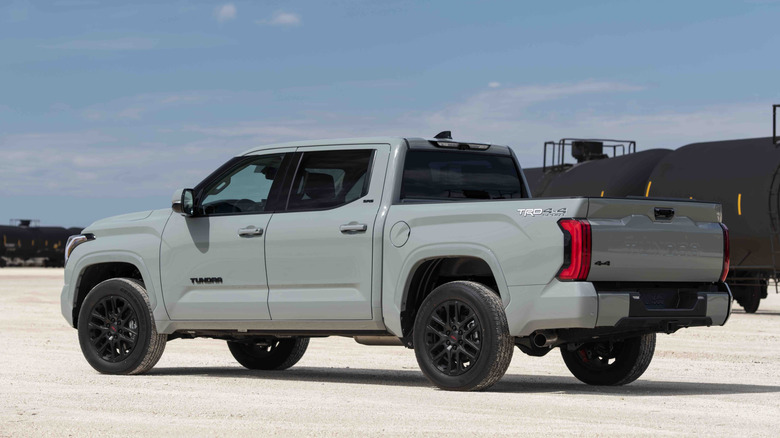
A back 3/4 shot of a Grey Toyota Tundra parked on gravel. - Toyota
The recall may have fixed the manufacturing defect, but that hasn't fully restored owner confidence in Toyota's turbo V6. Owners of 2023 and early 2024 Toyota Tundra models have continued to document issues not clearly tied to the initial debris problems. Owners have reported unpredictable throttle response and turbo lag, while others have mentioned issues such as oil leaks, overheating, and engine light warnings relating to the valve timing systems and turbo sensors. Battery problems and regenerative braking malfunctions in some hybrid models have compounded the drivetrain woes.
Data from NHTSA and CarComplaints have pointed to inconsistencies in how these engines wear in real-world use, suggesting that heat management and oil pressure may also be weak points in the V6's design. Meanwhile, some Tundras have required several engine or turbo swaps within a few thousand miles — raising concerns about parts supply and whether new engines will suffer similar fates.
For buyers who once trusted Toyota's reputation for reliability, these emerging issues are troubling. Given the turbo V6 has now replaced the old-school V8 across the Tundra trucks, owners are left wondering if Toyota has fully solved the problem — or if this engine is still a work in progress.
Want the latest in tech and auto trends? Subscribe to our free newsletter for the latest headlines, expert guides, and how-to tips, one email at a time. You can also add us as a preferred search source on Google.
Read the original article on SlashGear.
Source: “AOL Money”
