


Climate change is costing the world nearly a week of sleep every year
Climate change is costing the world nearly a week of sleep every year

Stuti MishraWed, July 15, 2026 at 11:00 AM UTC
15

Across nearly every city analyzed, the amount of temperature-related sleep loss linked to climate change has at least doubled since the early 1970s, researchers say (Climate Central)
Rising nighttime temperatures driven by climate change are robbing people of almost a full week of sleep each year, according to a new analysis.
The analysis, by US-based climate science organisation Climate Central, examined 1,338 cities worldwide and found that between 2020 and 2025, the average person lost nearly 56 hours of sleep per year due to high ambient nighttime temperatures.
More than six of those hours, roughly one extra sleepless night, can be directly attributed to warming caused by climate change, the analysis found.
It describes itself as the first to directly quantify hours of sleep lost to climate change by studying research on the effect of temperatures on sleep.
"Climate change and nighttime warming are increasingly impinging on the ability to get a good night's sleep," the analysis states.
The climate change-linked portion of sleep loss has at least doubled since the early 1970s in 1,335 of the 1,338 cities studied, and has at least tripled in 840 of them.
Cities in the Middle East experienced the greatest losses.
People in Saudi Arabia, Oman and the United Arab Emirates lost between 55 and 87 hours of sleep annually due to higher nighttime temperatures, with 12 to 16 of those hours directly linked to climate change – nearly two full nights per year.
People in southern India and several countries in Southeast Asia lost between 78 and 91 hours of sleep per year due to higher nighttime temperatures, including eight to nine hours due to climate change.
In cities across West Africa, including in Niger, Nigeria and Burkina Faso, people lost 65 or more hours of sleep annually, with 10 to 11 hours linked to climate change.
In the 253 US cities analysed, people lost an average of 36 hours of sleep per year from higher nighttime temperatures, of which about four hours were due to climate change. The worst-affected cities were in Arizona, California, Florida and Nevada.
Advertisement
In the early 1970s, climate change-related sleep loss across US cities was just over one hour per year. By the 2020s it had roughly tripled to about four hours.
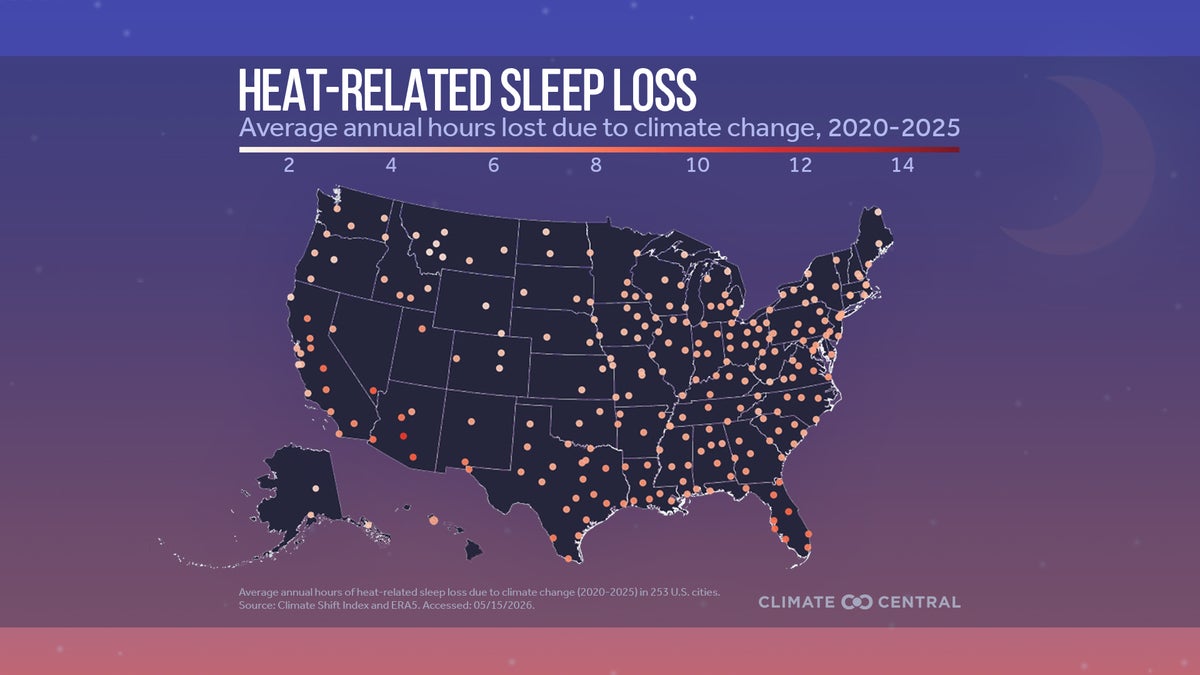
Across the 253 US cities analysed, climate change-related sleep loss remained relatively small but grew faster than the global average, roughly tripling from just over one hour per year in the early 1970s to about four hours per year in the 2020s. (Climate Central)
The health consequences of this accumulating loss are significant, scientists warn.
Poor sleep has been linked to impacts on mood, cognitive performance, productivity, and cardiovascular and immune health.
"Because many people already get insufficient sleep and sleep loss can accumulate over repeated nights, even modest reductions can become harmful over the course of a hot season," the analysis states.
Some groups face considerably greater risks. "The effect of warmer nighttime temperatures is more than twice as large for adults over 65 as for middle-aged adults, and nearly three times as large for people in lower-middle-income countries as for people in high-income countries," the analysis found.
Women and people already living in hotter climates were also found to face greater effects, with heat-related sleep loss likely to worsen as temperatures continue to rise.
In Europe and UK this year, heatwave has already been responsible for thousands of excess deaths. Scientists pooled national mortality statistics from 27 European countries in June and concluded that the heatwave is most likely to have contributed to the spike of 10,650 excess deaths between 22-28 June.
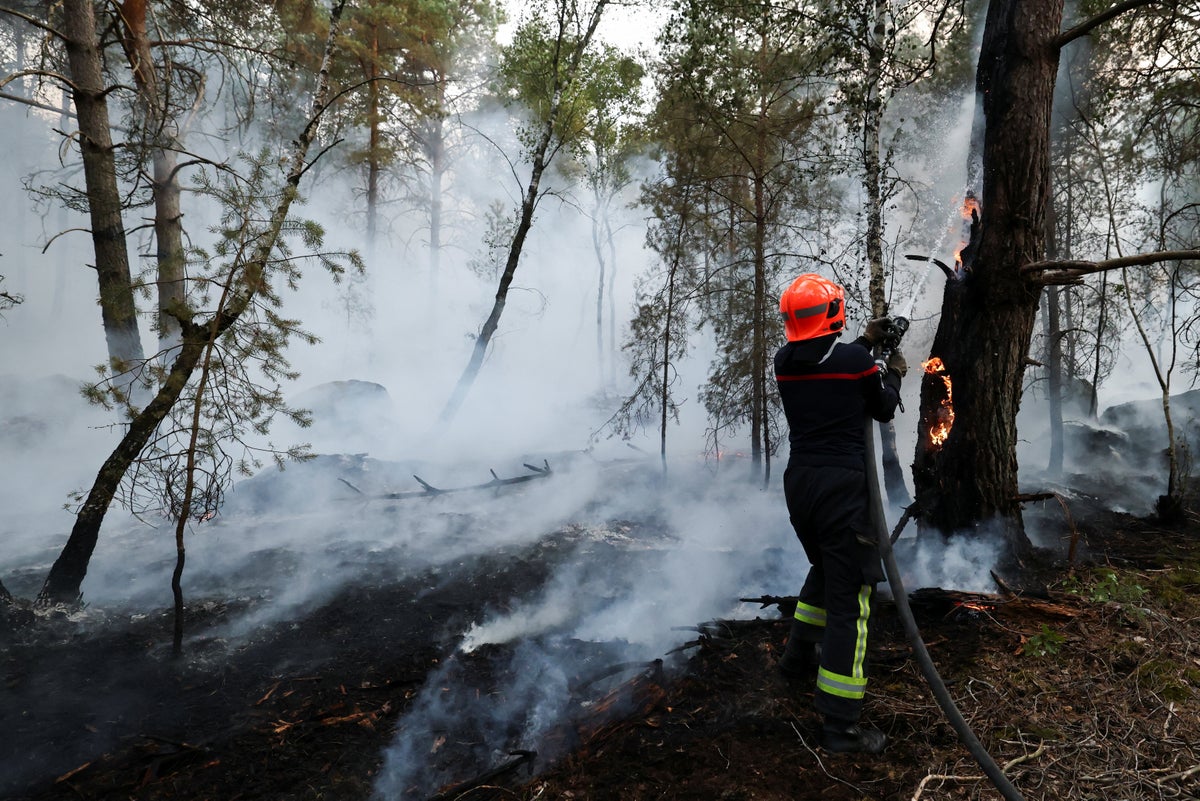
A firefighter sprays water to extinguish flames in the Fontainebleau forest during a wildfire, in Noisy-sur-Ecole, near Paris, during a heatwave affecting large parts of France (Reuters)
Air conditioning can partially offset the impact but does not eliminate it, research warns. Meanwhile, access remains deeply unequal.
Globally, only around 35 per cent of households had air conditioning as of 2021.
"Access to cooling is often tied to income and remains highly unequal in many hot countries, including parts of South Asia and Africa. Even so, hotter nights can still cut into sleep, even in higher-income settings where cooling is more likely to be available," the analysis notes.
The research underlying the analysis also drew more heavily from people in higher-income countries, meaning actual sleep losses in lower-income populations may be greater than the figures suggest.
The analysis was conducted using observed daily minimum temperatures alongside counterfactual temperatures – estimates of what temperatures would have been without human-caused climate change – across a six-year period from 2020 to 2025 and a historical period in the early 1970s.
Source: “AOL Breaking”
